Posts

Explain Nation: Why and how bad politicians entice people with low self-esteem
Image
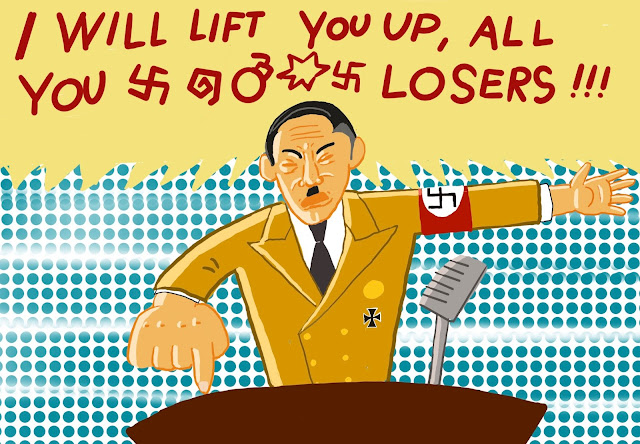
A psychoanalyst named Roger Money-Kyrle attended a political meeting in which both Adolf Hitler and his chief propagandist Joseph Goebbels gave a speech. He observed that the speakers first made the audience feel depressed and humiliated. He wrote, “The monster seemed to indulge in an orgy of self-pity.”  Then Hitler vented on the scapegoat: the Jews. “Self-pity gave place to hate, and the monster seemed on the point of becoming homicidal.” Finally, they turned to self-praise, a call for unity, and a promise of paradise but “only for true Germans and true Nazis.” Hitler’s rise to power was actually bolstered by the German people’s desire to bring back the national pride they lost after the defeat in World War 1. So, Hitler promised a new world order in which the Germans would be superior to all. This was also pointed out by Jean Lipman-Blumen, a professor of public policy and an expert in leadership, in her book The Allure of Toxic Leaders . She said there are always people who thi...

Explain Nation: Why some dieters can be grumpy, and how they can feel better

Image
I have a friend who was jolly when he was obese. After a very successful workout, he looked like a model from Vogue but he had the temper of a chef from Hell’s Kitchen. My staff in the office came up with the trick to give me sugary food before they presented their concepts. They told me that the tactic always raised the probability of me approving their work. Here are reasons why it’s not just a joke, not just a myth, that people who eat less can be in a bad mood. 1. Cortisol rising. This is the brain hormone that prepares the body for battle. When cortisol rises, more blood is pumped into body parts we need for fighting or running away. The heart beats faster and breathing becomes more rapid. Cortisol is triggered whenever the body senses danger.  If we don’t eat enough, the brain may interpret it as a threat to our survival. So, the rise in cortisol may make us easily triggered by anyone or anything annoying. 2. Sugar changes everything. Sweet food makes us happy because in the...

Explain Nation: The Origins of Bias

Image
Bias was and still is meant for the survival of our genes. In the beginning, our ancestor animals knew there were a million ways to die. When looking for food or just enjoying the sunshine, they looked like meals to a tiger. Later on in evolution, tribes often competed for food and killed each other. So, people learned to trust only those from their own family and village. Most mammals lived with “family” and in herds. People lived with family and tribes in villages. When with trusted ones, the brain produced oxytocin, the brain chemical that made them feel good and relaxed. When animals and people strayed away from their circle of trust, oxytocin dropped and the hormone cortisol would rise to give them a bad feeling. They would then be compelled to go back to the herd or family for that nice oxytocin fix again. That’s how the survival mechanism worked. We have inherited the instinct. Up to now, we have a predictive brain. It makes us feel uncomfortable when with people or in a situati...

Explain Nation: Why we feel bad after we feel good

Image
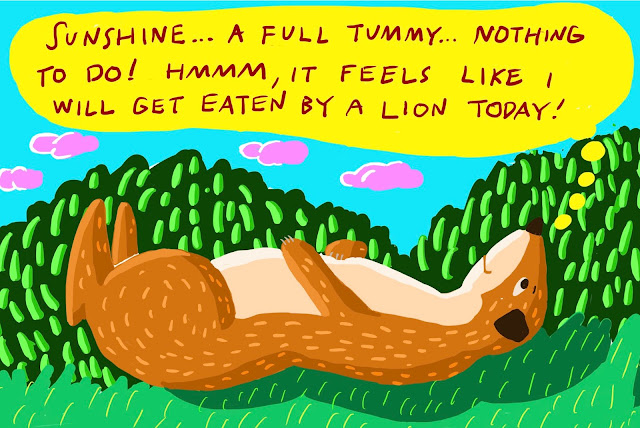
"The product looks so good and it’s so cheap. What’s the catch?!" We have become so suspicious of good things and good feelings. I have even heard of a woman who nearly panicked in the middle of a proposal from her boyfriend. This can be a plausible explanation for all that: Our mammal ancestors lived among herds to stay safe. Once in a while, a toddler mammal would stray into the open for some nice sunshine and a taste of freedom. In a little while, the hormone cortisol would give him a bad feeling that he couldn’t explain. He would be compelled to hurry back to the herd. In the presence of trusted ones, the brain chemical oxytocin would give him a feeling of comfort and bliss. Why is cortisol such a wet blanket? Well, its job order is to make animals, including humans, survive. Without it, we will feel too secure until a lion snatches us for lunch. The survival instinct made our forefathers see cultural systems of rewards and punishment as concepts so natural. They saw noth...

Lying in bed during daytime: Good or bad? Happy or guilty?

Image
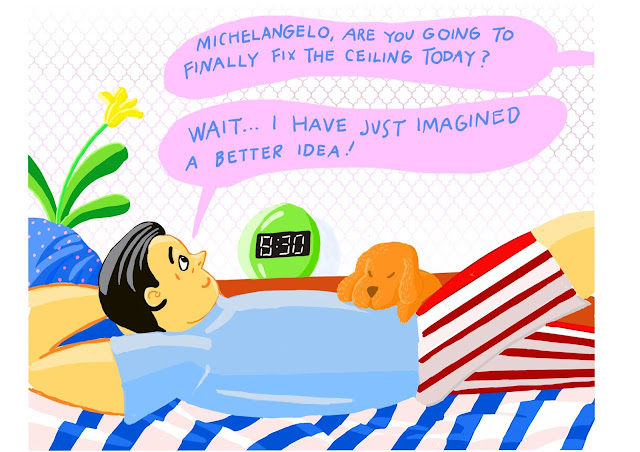
These days we sleep with a vengeance! A recent survey by the UK health group Bupa put “sleeping in a freshly-made bed” on top of the list of 50 things that make people happy. At first, I wondered why something routine felt special to many. Then I realized that before the lockdown, office work and bad traffic made us too worn out to feel the satin on our skin. The bed has also lost its ability to catapult us to the shower at 5:30 a.m. so we can catch the shuttle to work. We now have a little more time to rewind a nice dream. While we celebrate humankind’s reconquest of sleep, the satisfying indulgence of lying down in the daytime is still fighting for social approval. In The Art of Lying Down: A Guide To Horizontal Living, essayist Bernard Brunner lamented that this “pleasurable position” is so frowned upon. He wrote, “In a society tuned to memorable performance…and people prove their mettle by sitting down for long hours in front of computers, reclining often goes unappreciated.” Brunn...